


Dining Areas

Dressing Room/Closets

Entry/Front Porchs

Exercise Rooms


 Blog
BlogKid's Bedroom - Ceramic Tile
Is Ceramic Tile Right for Kids’ Bedrooms? Durable, Stylish Flooring Solutions
In this comprehensive blog post, acclaimed interior designer Arabella Whitethorn explores the potential of children’s bedrooms as a flooring choice for children’s bedrooms. Known for its durability and versatile aesthetics, ceramic tile offers a practical solution for a multifunctional space where kids sleep, play, and study. Arabella delves into nine critical design considerations—ranging from durability and comfort to health benefits and style coherence—providing designers with a clear understanding of how ceramic tile can enhance both the visual appeal and functionality of a child’s room. With insights on balancing the tile’s children’s bedrooms with soft elements like area rugs and soundproofing accessories, this post equips interior designers and decorators with inspiration and practical advice on using ceramic tile to create a stylish, child-friendly environment that stands the test of time.
Learn More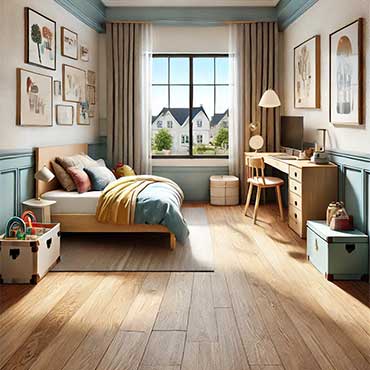 Blog
BlogKid's Bedroom - Luxury Vinyl Flooring
Luxury Vinyl Flooring in Kids' Bedrooms: Stylish, Durable & Practica
This blog post explores the suitability of for kids' bedrooms, a space where design meets functionality. Luxury Vinyl Flooring offers a perfect blend of durability, style, and practicality, making it a top choice for Interior Designers and Decorators. From its scratch-resistant surface to its wide range of aesthetic options, supports the dynamic needs of a child’s room while maintaining a cohesive and sophisticated design.
By addressing key considerations like durability, moisture resistance, budget, and health factors, the post provides an in-depth look at how LVF can enhance both the visual appeal and functionality of a kid's bedroom. Whether designing for playful toddlers or growing teens, Luxury Vinyl Flooring proves to be a versatile and inspired choice.
Learn More Blog
BlogBasement - Luxury Vinyl Flooring
Transform Your Basement with Luxury Vinyl Flooring
This blog post explores the transformative potential of in basement design, targeting Interior Designers and Decorators. It highlights 's ability to meet the unique challenges of below-grade spaces, including moisture management, durability, and aesthetic flexibility. With insights on style coherence, comfort, and practical benefits, the article empowers professionals to elevate their projects with LVF.
Whether crafting a serene guest suite or a vibrant family room, LVF proves to be a versatile and cost-effective solution, blending elegance with functionality to redefine basement interiors.
Learn More